Pass Laws to Freedom: How Women Resisted Apartheid's Control
Every year on August 9th, South Africa commemorates National Women's Day, a profound public holiday that stands as a powerful testament to the courage and resilience of women who actively fought against the oppressive apartheid regime. This day isn't just a celebration; it's a poignant reminder of the historic 1956 Women's March, an extraordinary demonstration where over 20,000 women of diverse racial backgrounds united in Pretoria. Their singular mission: to protest the apartheid government's egregious extension of pass laws to Black women, a legislative move designed to control their very existence. This article delves into the brutal reality of these pass laws, the fierce resistance they ignited, and the enduring legacy that continues to shape the fight for gender equality and freedom in South Africa today.
The Iron Fist of Apartheid: Understanding Pass Laws and Their Impact
Apartheid, a system of institutionalized racial segregation and discrimination enforced by the National Party government in South Africa from 1948 to 1994, relied heavily on legislative tools to control and separate its population. Among the most draconian were the pass laws. These laws mandated that Black South Africans carry identity documents—initially referred to as "passes" and later as "reference books"—to regulate their movement, residence, and employment. The primary goal was "influx control," preventing Black individuals from freely entering and residing in urban "white" areas, thereby preserving these spaces for Europeans.
The infamous Natives (Abolition of Passes and Coordination of Documents) Act of 1952 solidified this oppressive framework, requiring all African adults to possess a reference book. This document was a virtual prison in paper form, detailing personal information, employment history, and crucially, endorsements for permitted locations. Any violation meant severe penalties: fines, imprisonment, or even deportation to impoverished rural reserves. While Black men had endured the burden of these laws since the early 20th century, their extension to women marked a sinister escalation. Announced in 1952, the government's rationale was to curb what it perceived as "unregulated female migration" to cities, largely driven by the desperate search for employment and a better life.
For Black women, the implementation of pass laws was a gradual but terrifying encroachment on their freedom. Temporary permits were issued starting in 1954, followed by the full distribution of reference books from 1956, culminating in mandatory compliance by February 1, 1963. Without proper endorsements in their reference books, women were effectively barred from residing or working in urban centers. This left many with no option but to seek low-wage domestic service in white households, often under precarious permissions tied directly to employer endorsements, which could be revoked at whim. This deep-seated restriction not only intensified economic dependence but also perpetuated cycles of poverty, as urban opportunities beyond servitude became virtually inaccessible, tearing apart families and communities.
A United Front: The Genesis of the 1956 Women's March
The government's brazen move to extend pass laws to women ignited a fierce spark of defiance. Black women, already burdened by racial and gender discrimination, refused to be further subjugated. This collective outrage found its voice through the Federation of South African Women (FEDSAW), a powerful multi-racial organization founded in 1954. FEDSAW understood the profound threat these laws posed not just to individual freedom but to the very fabric of family life and the future of an entire generation.
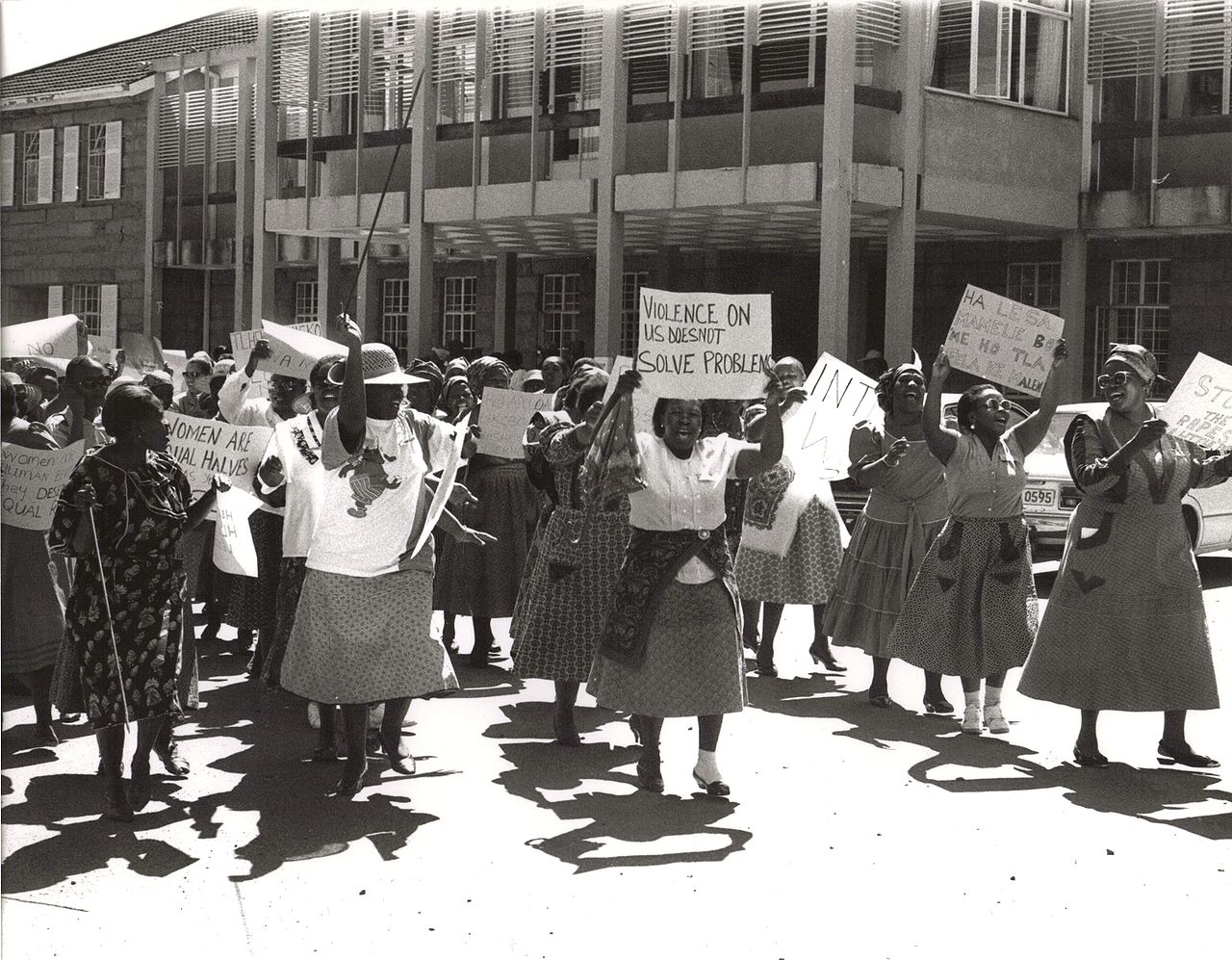
Under the visionary leadership of iconic figures like Lilian Ngoyi, Helen Joseph, Rahima Moosa, and Sophie De Bruyn, FEDSAW orchestrated a protest of unprecedented scale and solidarity. On August 9, 1956, an estimated 20,000 to 50,000 women, representing all racial groups – Black, Coloured, Indian, and White – converged on the Union Buildings in Pretoria. They came from cities and towns across the country, filling thousands of petitions with signatures, demonstrating a unified rejection of the discriminatory legislation. This was no ordinary demonstration; it was a meticulously organized act of civil disobedience, showcasing remarkable cross-racial cooperation at a time when apartheid sought to divide and conquer.
The women marched silently but with immense dignity, carrying their petitions to the offices of Prime Minister J.G. Strijdom. When he refused to meet them, Lilian Ngoyi, Helen Joseph, and others famously deposited bundles of petitions at his door. For 30 minutes, they stood in silent protest, followed by a powerful moment when they broke into song, chanting "Wathint' abafazi, wathint' imbokodo!" (Now you have touched the women, you have struck a rock!), a phrase that became an enduring symbol of women's strength and unwavering resolve. This historic event, often simply referred to as The 1956 Women's March: South Africa's Anti-Apartheid Resistance, forever etched itself into the annals of the freedom struggle.
Beyond the March: The Enduring Impact of Women's Resistance
While the immediate goal of stopping the pass laws was not achieved – the government continued with their implementation – the 1956 Women's March had an indelible and far-reaching impact. It was a monumental display of resistance that shattered the myth of government invincibility and demonstrated the sheer power of collective action, particularly from women who were often underestimated and marginalized. The march exposed the brutal reality of the apartheid regime's repressive policies to a wider national and international audience, galvanizing broader anti-apartheid efforts and inspiring countless others to join the struggle.
The courage of these women, their unwavering commitment to justice, and their ability to forge solidarity across racial lines provided a powerful blueprint for future resistance movements. Their actions proved that the fight for freedom was not just political but deeply personal, impacting every aspect of daily life, especially for women. Decades later, with the dawn of a democratic South Africa, the sacrifices and contributions of these women were formally recognized. In 1995, President Nelson Mandela proclaimed August 9th as National Women's Day, honoring their pivotal role and designating August as Women's Month, a profound tribute 39 years after their historic protest.
The legacy of the 1956 Women's March extends beyond mere commemoration. It highlights the indispensable role women played in shaping South Africa's liberation. Their resistance was not confined to grand marches; it was woven into the fabric of daily life – through clandestine meetings, organizing boycotts, nurturing families under immense pressure, and maintaining hope in the darkest of times. Their resilience taught future generations that true freedom requires constant vigilance and unwavering commitment to human dignity.
National Women's Day Today: Commemoration and Ongoing Struggles
Today, National Women's Day serves as a multifaceted platform. It's a day to reflect on the immense achievements of women in the freedom struggle and to celebrate their ongoing contributions across all sectors of South African society. It's a time to honor the trailblazers, the quiet heroes, and the everyday women who continue to build a more equitable nation. However, the day also serves as a crucial moment for introspection and a stark reminder that the fight for true gender equity is far from over.
Despite significant legislative progress since the end of apartheid, South Africa grapples with a high incidence of gender-based violence (GBV), particularly against women and girls. This painful reality underscores the persistent gaps between constitutional ideals and empirical progress in gender equality. The spirit of the 1956 march calls upon us to confront these modern challenges with the same courage and solidarity shown by our foremothers.
What We Can Learn and How We Can Act:
- Educate Ourselves and Others: Understand the history of women's activism and the ongoing struggles for gender equality, both locally and globally.
- Support Women's Organizations: Actively contribute to or volunteer for organizations working to combat GBV, empower women economically, and promote their rights.
- Advocate for Change: Speak out against sexism, discrimination, and violence in all its forms. Demand accountability from leaders and institutions.
- Champion Equality in Daily Life: Promote gender equality in your home, workplace, and community by challenging stereotypes and fostering inclusive environments.
- Remember the Power of Unity: The 1956 march showed that diverse groups uniting for a common cause can achieve remarkable feats. This principle remains vital today.
The global fight against gender oppression has evolved since the first recorded "Women's Day" celebrations in the United States in 1908 or the inaugural International Women's Day in 1911. Yet, the core message remains: women's rights are human rights, and the journey towards full equality requires persistent effort. National Women's Day in South Africa encapsulates this truth, inviting us to not only look back at a heroic past but also to look forward, committing to a future where every woman can live free from fear, discrimination, and control.
From the defiant stand against pass laws to the ongoing battle for safety and equity, the journey of South African women embodies a spirit of indomitable strength. National Women's Day is more than a public holiday; it is a call to action, a reminder that the seeds of freedom sown by brave women decades ago must be continually nurtured to blossom into a truly just and equal society for all.