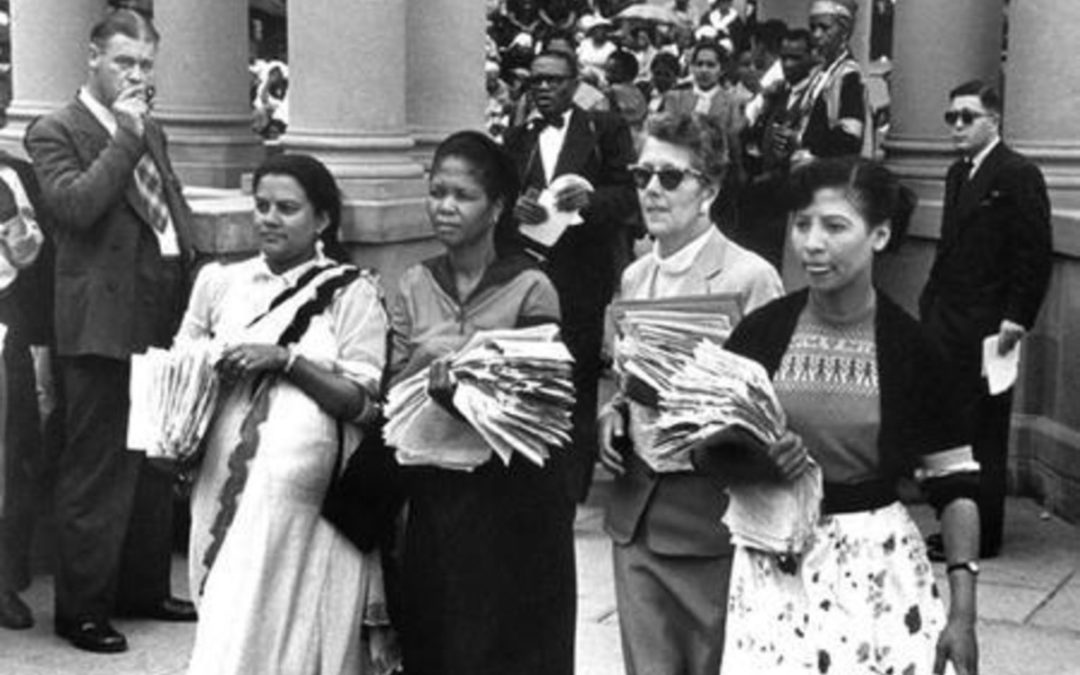
The 1956 Women's March: South Africa's Anti-Apartheid Resistance
Every year on August 9th, South Africa pauses to observe National Women's Day, a public holiday steeped in profound historical significance. More than just a day off, it's a powerful commemoration of the 1956 Women's March, an extraordinary act of defiance where over 20,000 women of all racial backgrounds converged on the Union Buildings in Pretoria. This monumental protest was a direct challenge to the apartheid government's attempts to extend discriminatory pass laws to Black women, marking a pivotal moment in the fight against racial segregation and a testament to women's unwavering courage in the face of oppression.
The march wasn't merely a demonstration; it was a carefully orchestrated act of solidarity and resistance, organized by the formidable Federation of South African Women (FEDSAW). It spotlighted the central role women played in unifying diverse communities against a regime designed to divide. While the immediate objective was to halt the extension of pass laws, its legacy reverberates through South African history, inspiring generations and solidifying the image of women as the "rock" of the nation's struggle for freedom.
The Chains of Control: Apartheid and the Pass Laws
To truly grasp the magnitude of the 1956 Women's March, one must understand the oppressive machinery of apartheid and the specific cruelty of its pass laws. Apartheid, a system of institutionalized racial segregation and discrimination, governed every aspect of life in South Africa. Its core objective was to maintain white minority rule by regulating the movement, residence, and employment of Black South Africans, systematically disenfranchising them and denying basic human rights.
At the heart of this control were the pass laws, initially implemented through various acts like the Natives (Abolition of Passes and Coordination of Documents) Act of 1952. These laws mandated that Black individuals carry identity documents—initially "passes," later "reference books"—at all times. These documents dictated where one could live, work, or even be present. Violation meant severe penalties: fines, imprisonment, or forced removal to designated rural reserves.
While Black men had endured the burden of these laws for decades, the government's announcement in 1952 to extend them to women represented a new and particularly vicious assault. This move was a deliberate attempt to curb the migration of Black women to urban areas, viewed by authorities as "unregulated" movement threatening the apartheid design of racial separation. The implementation for women began incrementally, with temporary permits in 1954 and full reference books from 1956, becoming mandatory by February 1, 1963. Without the correct endorsements, women were barred from urban centers, forcing many into precarious, low-wage domestic service under the strictures of employer approval. This deeply entrenched economic dependence and severely limited their ability to seek better opportunities, trapping families in poverty and further fragmenting communities. The pass laws were not just bureaucratic hurdles; they were tools of dehumanization, tearing at the fabric of families and denying fundamental freedoms. Learn more about how women resisted these controls in Pass Laws to Freedom: How Women Resisted Apartheid's Control.
A United Front: FEDSAW and the Power of Collective Action
The decision to extend pass laws to women was a grave miscalculation by the apartheid regime. What they anticipated as an easy implementation met with fierce, organized resistance. The driving force behind this unprecedented mobilization was the Federation of South African Women (FEDSAW), a non-racial organization founded in 1954. FEDSAW understood that the fight against pass laws was not just about legal documents; it was about the dignity, autonomy, and very survival of Black families and communities.
FEDSAW's genius lay in its ability to foster cross-racial solidarity, uniting women from diverse ethnic, linguistic, and socio-economic backgrounds. This was a direct challenge to apartheid's divisive ideology. Under the leadership of extraordinary activists like Lilian Ngoyi, Helen Joseph, Rahima Moosa, and Sophia Williams-De Bruyn, FEDSAW meticulously planned the march. They collected tens of thousands of signatures on petitions from across the country, often under dangerous and difficult circumstances. This grassroots effort demonstrated the widespread opposition and the deep personal impact of the pass laws on countless women.
The organization of the march itself was a logistical marvel. Women traveled from all corners of South Africa, using various modes of transport, knowing full well the risks involved. Their unity, determination, and meticulous planning transformed a potential chaotic protest into a powerful, disciplined display of collective will.
The Day of Defiance: August 9, 1956
On August 9, 1956, the streets of Pretoria witnessed an extraordinary spectacle. Over 20,000 women, dressed in traditional African attire, Indian saris, and the uniforms of domestic workers, marched peacefully to the Union Buildings. Their procession was a vibrant tapestry of South African society, a living embodiment of the multi-racial unity apartheid sought to destroy. They carried their children, banners proclaiming "You strike a woman, you strike a rock," and the thousands of signed petitions.
Upon reaching the Union Buildings, the women delivered the petitions, containing over 100,000 signatures, to the office of Prime Minister J.G. Strijdom. What followed was perhaps the most iconic moment of the day: after the petitions were delivered, the women stood in a silent protest for 30 minutes, their stillness speaking volumes. It was a poignant demonstration of dignity, strength, and unwavering resolve. Following this powerful silence, they burst into a freedom song specially composed for the occasion: "Wathint' abafazi, wathint' imbokodo!" (Now you have touched the women, you have struck a rock!). This phrase became a rallying cry, symbolizing the indomitable spirit of South African women.
The march was a triumph of non-violent resistance. It exposed the brutality of the apartheid regime on an international stage and demonstrated that women, often relegated to the background of political life, were a formidable force in the struggle for liberation.
From Protest to Proclamation: The Enduring Legacy of National Women's Day
While the 1956 Women's March did not immediately halt the implementation of pass laws, its impact was profound and far-reaching. It significantly galvanized the broader anti-apartheid movement, inspiring further acts of defiance and solidifying women's leadership within the liberation struggle. The women of 1956 laid a crucial foundation for the eventual dismantling of apartheid.
Decades later, with the dawn of a democratic South Africa, the nation sought to honor these extraordinary contributions. In 1995, just a year after the first democratic elections, President Nelson Mandela officially declared August 9th as National Women's Day. This proclamation, 39 years after the historic protest, was a powerful acknowledgment of women's pivotal role in achieving freedom and designated August as Women's Month, a period for broader reflection and celebration.
Today, National Women's Day serves a dual purpose. It is a day to commemorate the bravery and sacrifice of the women of 1956, reminding us of the power of unity and resistance against injustice. It is also a critical platform for reflecting on the ongoing journey toward gender equality in South Africa. While immense progress has been made since apartheid, the nation still grapples with significant challenges, most notably the alarmingly high incidence of gender-based violence (GBV). This tragic reality underscores the persistent gaps between the commemoration of past victories and the empirical progress needed for true gender equity. For a deeper look at these contemporary challenges, read National Women's Day: Legacy of Freedom and Gender Equity Gaps.
Reflecting and Acting on National Women's Day
Observing National Women's Day effectively means more than just remembering a historical event; it means actively engaging with its lessons and its modern relevance:
- Educate Yourself and Others: Take the time to learn about the history of the 1956 March, the lives of the women involved, and the broader context of the anti-apartheid struggle. Share this knowledge with younger generations.
- Advocate for Gender Equality: Support organizations working to combat gender-based violence, promote women's economic empowerment, and ensure women's representation in all spheres of society.
- Celebrate Women's Achievements: Acknowledge and uplift the women in your community, workplaces, and families who continue to break barriers and inspire change.
- Speak Out Against Injustice: Emulate the courage of the 1956 marchers by challenging discrimination and advocating for human rights in your own spheres of influence.
The 1956 Women's March remains an enduring symbol of courage, resilience, and the transformative power of women's collective action. National Women's Day is a crucial reminder that freedom is not free, and the fight for true equality is an ongoing journey. By honoring the past and addressing present challenges, South Africa strives to build a society where the legacy of these brave women truly blossoms into a future of safety, dignity, and equity for all.